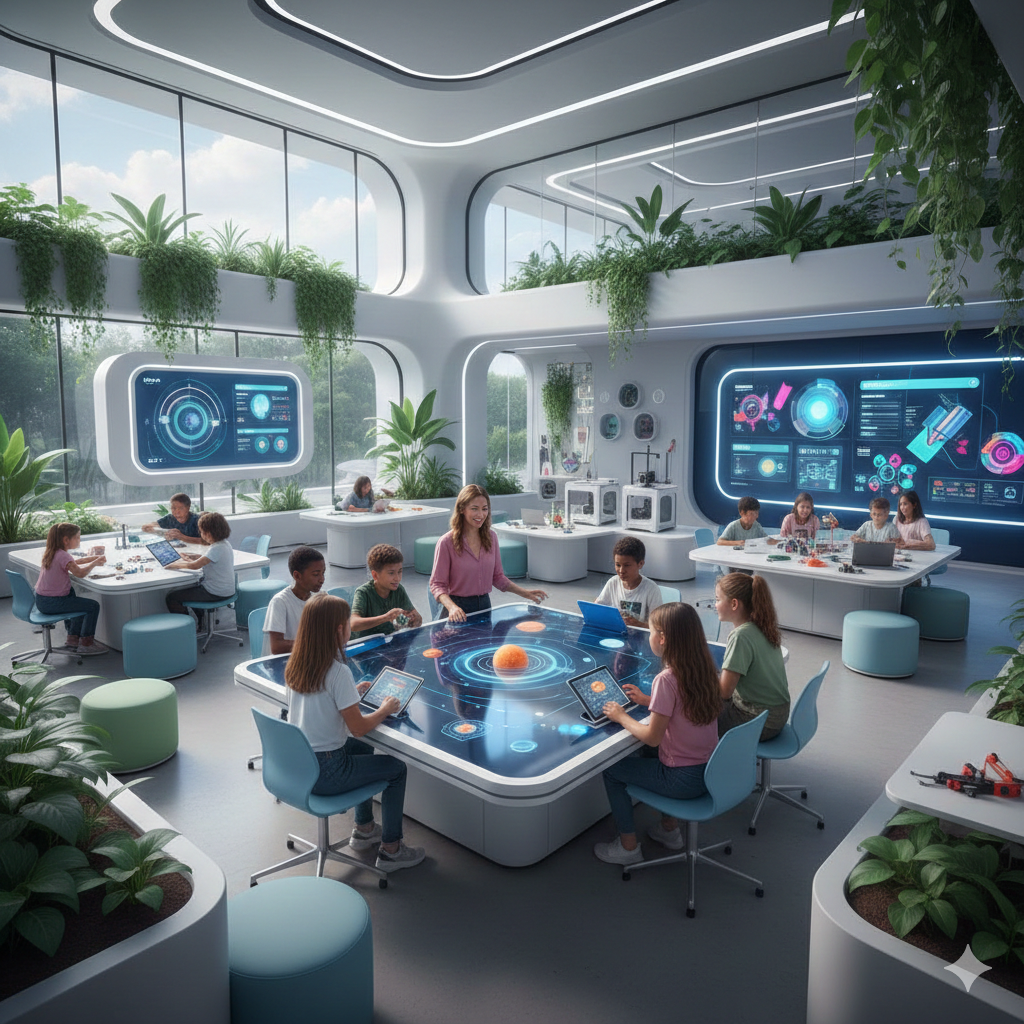
Education is the cornerstone of human progress, yet the traditional models that served the 19th and 20th centuries are increasingly struggling to meet the demands of a rapidly evolving digital world. Enter the concept of the “Nova scola” (New School). This movement represents more than just a change in curriculum; it is a fundamental shift in how we perceive the relationship between teacher, student, and knowledge.
From the integration of cutting-edge technology to the prioritization of emotional intelligence, the Nova scola movement is redefining the classroom experience. This article explores the origins, pillars, and future of this educational revolution.
1. The Origins of the New School Movement
The “Nova scola” philosophy didn’t appear in a vacuum. It draws inspiration from the Escola Nova movements of the early 20th century, led by visionaries like Anísio Teixeira in Brazil and John Dewey in the United States.
The core idea was simple but radical: education should be student-centered. Instead of students being passive vessels waiting to be filled with information, they are active participants in their own learning process. Today’s Nova scola takes these foundations and supercharges them with modern psychology and digital tools.
2. The Pillars of Nova scola: What Makes It Different?
To understand why this model is gaining traction globally, we must look at the specific pillars that support it. Unlike traditional schools that focus on rote memorization, Nova scola focuses on competencies.
Active Learning Methodologies
In a Nova scola classroom, you won’t find a teacher lecturing at a blackboard for six hours a day. Instead, you see:
-
Project-Based Learning (PBL): Students solve real-world problems through long-term projects.
-
The Flipped Classroom: Students study the theory at home via videos or reading and use class time for discussion and practical application.
-
Gamification: Using game design elements to increase engagement and motivation.
Socio-Emotional Learning (SEL)
Perhaps the most significant shift is the recognition that a child cannot learn if they cannot manage their emotions. Nova scola integrates SEL into every subject, teaching:
-
Empathy and collaboration.
-
Resilience in the face of failure.
-
Self-regulation and focus.
3. The Role of Technology: Beyond the Tablet
While many people equate “Modern School” with “Laptops for everyone,” the Nova scola approach is more nuanced. Technology is treated as a means, not an end.
Adaptive Learning Platforms
Modern platforms use AI to identify exactly where a student is struggling. If a child understands geometry but fails at fractions, the system adapts the curriculum in real-time. This allows for personalized education on a scale that was previously impossible.
Digital Literacy and Citizenship
It isn’t enough to know how to use a computer; students must learn how to navigate the internet safely, distinguish between real and fake news, and understand the ethics of Artificial Intelligence.
4. The Changing Role of the Educator
In the Nova scola model, the teacher’s “throne” at the front of the room is gone. The educator is now a mentor, facilitator, and curator of experiences.
From Lecturer to Coach
The teacher no longer needs to be the sole source of facts—Google handles that. The teacher’s value now lies in teaching students how to think, how to ask the right questions, and how to synthesize information from multiple sources. This shift requires extensive professional development and a change in the “teacher mindset.”
5. Inclusion and Diversity as a Standard
A true Nova scola is an inclusive one. The rigid “one size fits all” model of traditional schooling often left behind students with neurodiversity (such as ADHD or Autism) or those from marginalized backgrounds.
Universal Design for Learning (UDL)
Nova scola utilizes UDL principles to ensure that materials are accessible to everyone from the start. This means offering information in multiple formats—visual, auditory, and kinesthetic—ensuring no student is barred from the “Land of Knowledge.”
6. Architecture and the Learning Environment
The physical space of a Nova scola looks very different from the “factory model” schools of the past. Research shows that environment significantly impacts cognitive load and creativity.
-
Flexible Spaces: Movable furniture allows a room to switch from a lecture hall to a collaborative workshop in minutes.
-
Nature Integration: “Biophilic design” incorporates plants and natural light, which has been proven to reduce student stress levels and improve concentration.
-
Maker Spaces: Dedicated areas for “tinkering,” 3D printing, and building physical prototypes.
7. Challenges in Implementing the Nova scola Model
Despite the clear benefits, transitioning to this model is not without obstacles.
-
Infrastructure Gaps: In many parts of the world, high-speed internet and modern facilities are still luxuries.
-
Standardized Testing: Most national education systems still rely on traditional exams, which often penalize students who have been taught via creative, project-based methods.
-
Resistance to Change: Both parents and administrators can be hesitant to move away from the “tried and true” methods they grew up with.
8. The Future: Education in the Age of AI
As we look toward 2030 and beyond, the Nova scola will likely become the standard rather than the exception. With AI capable of performing technical tasks, human education will focus more on creativity, critical thinking, and ethics.
We are moving toward a “Lifelong Learning” model where the school is not just a building you visit for 12 years, but a community hub that supports learning at all ages.
Conclusion: A Call to Action for Educators and Parents
The Nova scola is more than a trend; it is a necessity. To prepare the next generation for a world of climate change, technological disruption, and global connectivity, we must give them more than just facts. We must give them the tools to innovate, empathize, and lead.
The transformation of education starts with a single classroom, a single teacher willing to step aside and let the student lead, and a community that values curiosity over compliance.